

A Season to See Your Home Differently
Spring pet safety begins at home.
As the air shifts and windows open, there is a natural urge to refresh our surroundings. For pet parents, this season offers more than a visual reset. It invites us to look at our homes through our animals’ eyes.
What smells strong to them?
What spaces feel secure?
Where might curiosity outpace safety?
A gentle home refresh creates an environment where comfort and protection coexist.
1. Choosing Pet-Safe Cleaning Rituals
Traditional cleaning products often contain harsh chemicals and overpowering fragrances that can irritate sensitive paws, noses, and lungs.
Consider transitioning to:
Plant-based, fragrance-free cleaners
Simple diluted vinegar solutions
Enzyme-based products designed for pet households
Milder scents respect your pet’s heightened sense of smell and create a breathable home.
Clean should feel calm, not sharp.
2. The Gentle Art of Decluttering Pet Spaces
Spring is a natural time to reassess what your pet uses daily.
Inspect:
Toy baskets for frayed seams or loose parts
Bedding for flattened support
Scratching posts or chew items for structural wear
Replacing a worn bed or damaged toy is not about aesthetics. It protects alignment, safety, and daily comfort.
Small upgrades can quietly improve quality of life.
3. Checking Windows and Breezeways
Open windows invite fresh air. They also introduce risk.
Inspect screens for:
Tears or loose frames
Gaps near edges
Weak latches
It takes only a moment for a startled pet to lean too hard or jump unexpectedly. Strong boundaries allow everyone to enjoy the breeze without anxiety.
Safety supports freedom.
4. Mindful Yard and Garden Preparation
If you have outdoor space, April is the time to walk your perimeter slowly.
Look for:
Toxic plants such as lilies, tulips, or azaleas
Sharp debris from winter storms
Gaps in fencing
A calm, intentional yard check ensures outdoor exploration remains joyful rather than reactive.
Prevention is quiet care.
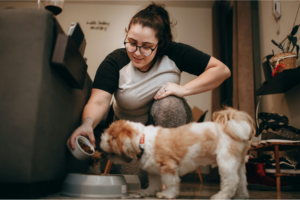
5. Refreshing the Water and Food Station
Over winter, mineral buildup and dust can accumulate in feeding areas.
Deep-clean bowls with hot water and gentle soap.
Check for cracks in plastic bowls and consider stainless steel or ceramic alternatives.
Wipe down mats and surrounding flooring.
If your pet seems distracted during meals, consider moving feeding stations to a quieter, low-traffic area.
Calm dining supports better digestion and emotional security.
6. Creating a Transition Buffer
Seasonal shifts can be stimulating.
As you increase outdoor time or rearrange spaces, watch for signs of fatigue or overstimulation.
Provide:
A quiet corner
Familiar bedding
Low lighting
Minimal foot traffic
Not every change needs to happen at once. A transition buffer allows your pet to adjust at their own pace.
There is no rush.
Gentle Tools That Can Help
- Enzymatic Surface Cleaner – A fragrance-free, plant-derived cleaner that removes messes without leaving irritating residues.
- Orthopedic Pet Bed Insert – Adds joint support during more active spring months, especially for aging pets.
- Water Fountain – Encourages hydration with filtered, moving water while minimizing pollen and debris accumulation.
Internal Resources for Extra Support
- Daily Pet Care Checklist – Track seasonal transitions and ensure your refreshed routines stay consistent.
- Pet Insurance Made Simple – What every pet parent should know about planning for veterinary care, unexpected costs, and peace of mind.
Seasonal Shop Special
To support mindful spring routines, we are offering a $3 voucher for any digital guide or supportive tool in our shop.
Use code SPRING26 at checkout.
Valid through March 31, 2026.
A Gentle Reflection
A refreshed home is not about perfection.
It is about awareness.
When we clean thoughtfully, check boundaries, and adjust routines gradually, we create an environment where our pets can relax fully.
You are not just tidying.
You are tending.
Join our email list for steady guidance and seasonal support throughout the year.
Frequently Asked Questions
Q1: Which spring flowers are most dangerous for pets?
Lilies, tulips, and azaleas are common spring plants that can be toxic. Always research plants before bringing them into your home or garden.
Q2: How can I tell if a cleaning product is bothering my pet?
Watch for sneezing, watery eyes, paw licking, or avoidance of a recently cleaned area. If symptoms appear, discontinue use and consult your veterinarian if needed.
Q3: Is it okay to change routines suddenly in spring?
Most pets adjust better to gradual change. Increase walk length or environmental changes slowly to support emotional regulation.
Disclaimer
This post is for informational purposes only and is not a substitute for veterinary advice. Please consult your veterinarian for personalized recommendations if your pet’s health or behavior raises concern.
Affiliate Disclosure
Some links in this post may be affiliate links, which means we may earn a small commission if you make a purchase. We only share products we trust to support gentle, thoughtful care routines.