

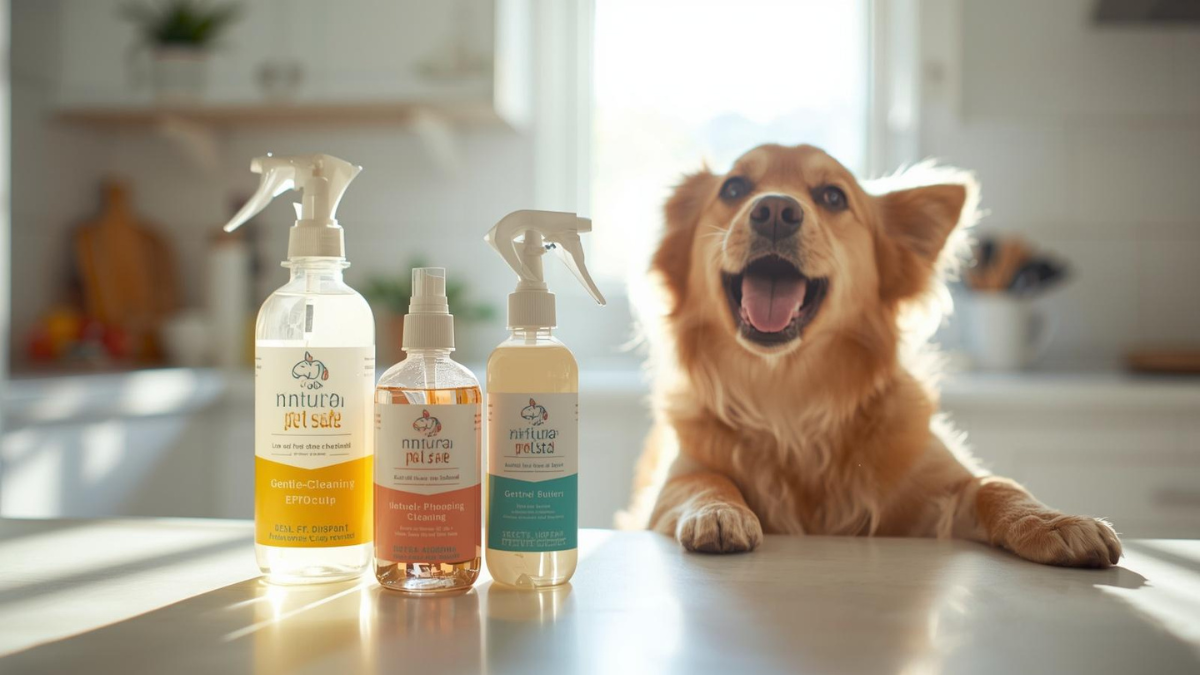
Spring pet safety doesn’t have to feel overwhelming. As the air shifts and light lingers a little longer, many of us begin refreshing our homes. For your pet, these changes matter too.
Spring pet safety starts with small changes in your home environment. Use pet-safe cleaning products, check windows and outdoor spaces, remove toxic plants, and create calm feeding and resting areas to support your pet’s comfort during seasonal transitions.
A few thoughtful updates to their environment can support their comfort, safety, and overall well-being. When you take a moment to see your home through their eyes, small changes can create a space that feels calm, secure, and easy to move through.
1. Choose Cleaning Products That Support Sensitive Systems
Many traditional cleaners contain strong chemicals and artificial fragrances that can irritate your pet’s paws, skin, and respiratory system.
A gentler approach can make a meaningful difference.
Plant-based or fragrance-free options, along with simple solutions like diluted vinegar, help keep your home clean without overwhelming your pet’s senses. What smells fresh to us can feel intense to them.
A breathable home is one they can fully relax in.
2. Refresh Their Space with Comfort in Mind
Take a quiet look at your pet’s everyday items. Toys, bedding, and resting areas naturally wear down over time.
This is not just about tidying. It is about comfort and safety.
Worn toys can break or become unsafe. Flattened bedding may no longer support joints, especially for older pets. Replacing or refreshing these items can gently improve how your pet rests, plays, and moves through their day.
Small updates often bring noticeable ease.
3. Check Windows and Open Spaces
Fresh air is one of the simple joys of the season. Open windows and breezeways, however, can introduce new risks.
Secure screens and stable barriers matter more than we often realize.
A curious cat or an excited dog can lean, jump, or startle in a moment. Making sure these spaces are safe allows your pet to enjoy the changing air without added risk.
Peace of mind often lives in these quiet checks.
4. Walk Your Outdoor Space with Intention
If you have a yard or garden, early spring is the time to reassess it gently.
Some seasonal plants, such as lilies, tulips, and azaleas, can be harmful if ingested. Winter debris or small gaps in fencing can also go unnoticed until your pet finds them first.
A slow walk around your space helps you see what they might encounter.
This is not about perfection. It is about awareness.
5. Reset Feeding Areas for Calm and Cleanliness
Food and water stations often collect buildup over time, especially in cooler months when routines shift.
A deep clean of bowls and surrounding areas can support both hygiene and comfort.
You might also notice that your pet eats more calmly in a quieter, low-traffic space. Reducing distractions during meals can support better digestion and a greater sense of security.
Where they eat matters as much as what they eat.
6. Support Gentle Transitions in Routine
Seasonal changes can bring more activity, new schedules, and different energy in the home.
Your pet may need time to adjust.
If you are adding longer walks, more outdoor time, or shifting daily rhythms, consider easing into these changes gradually. Providing a familiar resting space with consistent scents and textures gives your pet a place to reset.
Adjustment does not have to feel abrupt.
Gentle Tools That Can Help
- Enzymatic Surface Cleaner – A fragrance-free, plant-derived cleaner that removes messes without leaving irritating residues.
- Orthopedic Pet Bed Insert – Adds joint support during more active spring months, especially for aging pets.
- Water Fountain – Encourages hydration with filtered, moving water while minimizing pollen and debris accumulation.
Internal Resources for Extra Support
- Daily Pet Care Checklist – Track seasonal transitions and ensure your refreshed routines stay consistent.
- Pet Insurance Made Simple – What every pet parent should know about planning for veterinary care, unexpected costs, and peace of mind.
Seasonal Shop Special
To support mindful spring routines, we are offering a $3 voucher for any digital guide or supportive tool in our shop.
Use code CAREAPR26 at checkout.
Valid through April 30, 2026.
A Gentle Reflection
Caring for your pet does not have to be complex to be meaningful.
The small things you do each day create a sense of safety, trust, and connection. As the season changes, this is simply an opportunity to notice what is already working and gently support what needs a little more attention.
You are not starting over. You are building on care that already matters.
Join our email list for steady guidance and seasonal support throughout the year.
Frequently Asked Questions
What should you check for pet safety in spring?
To support spring pet safety, focus on using pet-safe cleaning products, securing windows and screens, checking for toxic plants like lilies and tulips, refreshing worn bedding and toys, and maintaining clean, calm feeding areas.
Which spring plants are dangerous for pets?
Common plants such as lilies, tulips, and azaleas can be toxic. Always check before introducing new plants into your home or garden.
How do I know if a cleaner is affecting my pet?
Watch for sneezing, watery eyes, or repeated paw licking. Avoidance of a recently cleaned area can also signal discomfort.
Can I change my pet’s routine in spring?
Yes, but gradual changes are best. Small, steady adjustments help your pet adapt comfortably.
Disclaimer
This post is for informational purposes only and is not a substitute for veterinary advice. Please consult your veterinarian for personalized recommendations if your pet’s health or behavior raises concern.
Affiliate Disclosure
Some links in this post may be affiliate links, which means we may earn a small commission if you make a purchase. We only share products we trust to support gentle, thoughtful care routines.