

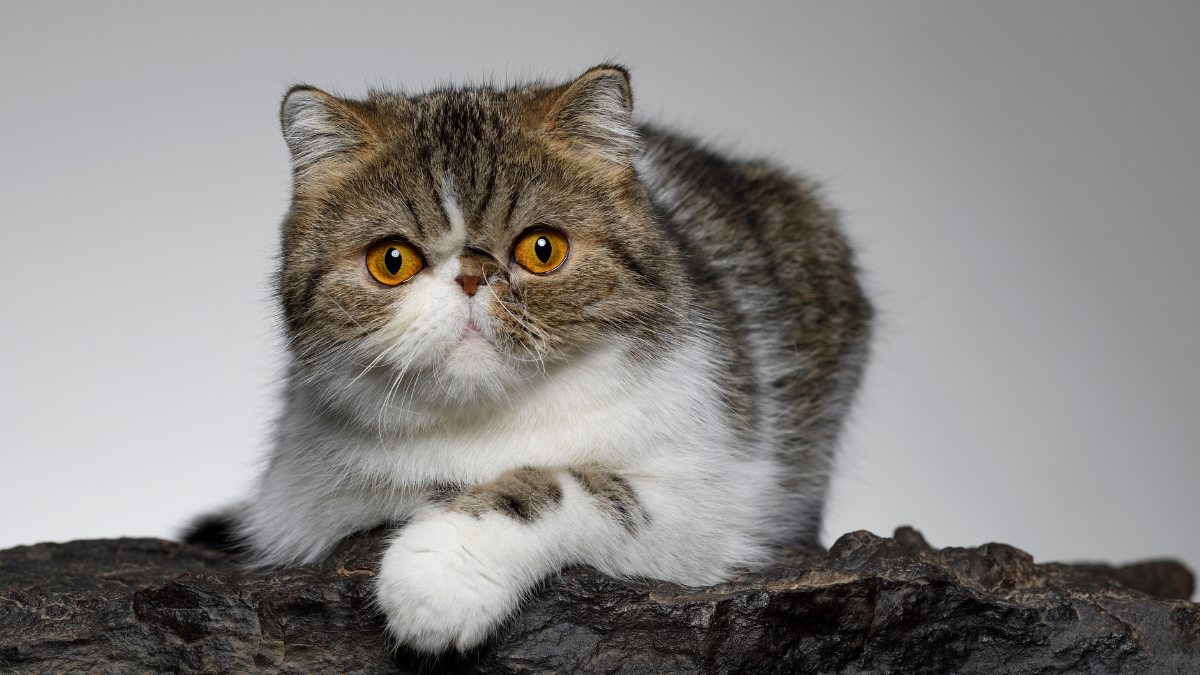
A Persian Personality in a Plush Coat
The Exotic Shorthair is often described as a Persian in a short, dense coat.
With their round face, large expressive eyes, and soft, plush fur, Exotic Shorthairs have a distinctive, almost teddy-bear appearance. Beneath that sweet expression is a calm, affectionate cat who thrives in stable, loving environments.
They are not dramatic.
They are steady.
1. A Carefully Developed History
The Exotic Shorthair was developed in the mid-20th century by crossing Persians with American Shorthairs. The goal was to preserve the Persian’s gentle temperament and round features while creating a shorter, easier-to-maintain coat.
The result is a breed that retains the Persian’s quiet devotion but with slightly simplified grooming needs.
Their origins reflect intention and refinement.
2. Temperament: Calm, Loyal, and Observant
The Exotic Shorthair temperament is typically:
- Affectionate but not overly demanding
- Quiet and gentle
- Loyal to their primary caregiver
- Playful in short, sweet bursts
They enjoy companionship and may follow their favorite person from room to room. While they are not usually high-energy climbers, they appreciate predictable routines and cozy resting spots.
Their affection is soft and consistent.
3. Exercise and Environmental Needs
Exotic Shorthairs are moderate-energy cats.
They benefit from:
Interactive wand play
Puzzle feeders
Comfortable resting spaces
Window perches
They are less likely to scale tall shelves compared to more athletic breeds, but they still require mental stimulation to remain engaged.
A calm environment supports their emotional balance.
4. Grooming and Health Considerations
Although their coat is shorter than a Persian’s, it is thick and dense.
Expect:
Brushing several times per week
Regular eye cleaning due to tear staining
Routine nail trimming
Monitoring for breathing concerns
Because they are brachycephalic (flat-faced), some Exotic Shorthairs may be prone to respiratory sensitivity or tear duct overflow. Regular veterinary care is essential.
Gentle daily maintenance prevents discomfort.
5. Is an Exotic Shorthair the Right Fit?
An Exotic Shorthair may thrive in a home that:
- Prefers a calm, indoor companion
- Can commit to regular grooming and eye care
- Appreciates a steady, affectionate personality
- Values routine and predictability
They may not be ideal for households seeking a highly athletic or constantly active feline.
They are not performers.
> They are companions.
Gentle Tools That Can Help
- Soft Slicker Brush – Maintains their plush coat and reduces matting.
- Soft Facial Wipes – Supports gentle daily cleaning of tear staining.
- Scratching Post – Encourages natural scratching without requiring tall climbing.
Internal Resources for Extra Support
- Daily Pet Care Checklist – Track grooming, eye care, and enrichment routines.
A Gentle Reflection
The Exotic Shorthair does not demand attention loudly.
They offer companionship quietly.
Their round eyes and plush coat may capture the room, but it is their steady presence that defines them.
For homes seeking calm affection wrapped in softness, the Exotic Shorthair brings warmth without overwhelm.
Frequently Asked Questions
Are Exotic Shorthairs good for apartments?
Yes. Their calm temperament and moderate energy make them well-suited for apartment living when given consistent enrichment.
Do Exotic Shorthairs shed heavily?
They do shed, particularly seasonally. Regular brushing helps manage loose fur.
Are Exotic Shorthairs high maintenance?
While their coat is easier than a Persian’s, they still require consistent grooming and eye care due to their facial structure.
Disclaimer
This post is for informational purposes only and is not a substitute for professional veterinary advice. Always consult a veterinarian regarding breed-specific health considerations, particularly breathing or eye concerns.
Affiliate Disclosure
Some links in this post may be affiliate links, which means we may earn a small commission if you make a purchase. We only share products we trust to support thoughtful, relationship-centered care.