
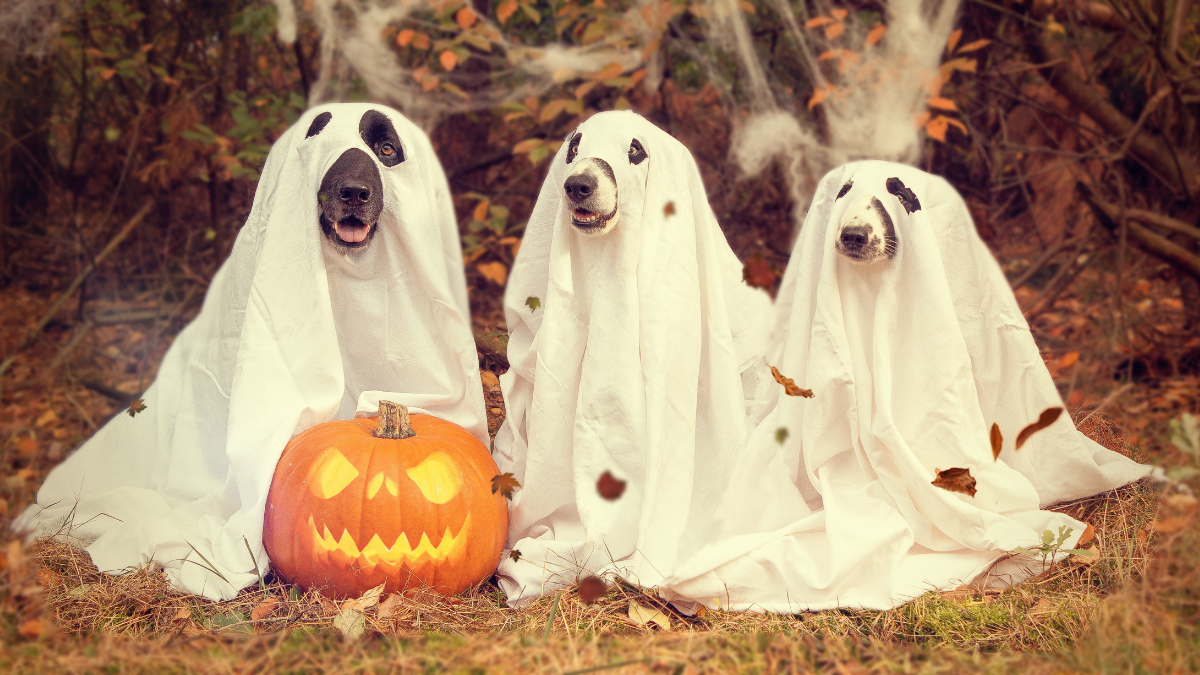
Halloween can be a fun night for the family, but your pet may experience it very differently.
The doorbell rings again and again. People arrive wearing unfamiliar costumes. Excited voices fill the house. Candy appears everywhere. Doors open more often than usual.
For some pets, all of that stimulation can become overwhelming.
A little preparation can make a big difference. By creating a quiet retreat, keeping potentially dangerous treats out of reach, respecting your pet’s comfort around costumes, and planning for all those knocks at the door, you can make Halloween safer and calmer for everyone.
Halloween and fall gatherings can expose pets to unfamiliar people, repeated doorbells, costumes, open doors, and unsafe foods. Preparing a quiet retreat, keeping candy securely stored, respecting a pet’s comfort with costumes, managing noise, and reducing escape opportunities can help create a safer and calmer celebration.
1. Understand Why Halloween Can Feel Different
Imagine experiencing Halloween without knowing what Halloween is.
The doorbell suddenly rings every few minutes.
People who look unfamiliar appear outside.
Your household sounds different.
Family members may even look strange in costumes.
A pet who barks, hides, paces, or seeks extra attention isn’t necessarily behaving badly. They may simply be responding to an environment that suddenly feels unfamiliar.
Recognizing that can change how you respond.
Instead of trying to make your pet participate, focus on helping them feel secure.
2. Prepare Their Quiet Retreat Before the Fun Begins
Don’t wait until your pet becomes overwhelmed to create their safe space.
Choose a quiet room or familiar area away from the front door and set it up before guests or trick-or-treaters arrive.
Include familiar comforts such as:
- Their usual bed or blanket
- Fresh water
- A favorite toy
- A pet-safe chew or enrichment activity
- Soft background sound
- Comfortable lighting
If your pet already uses a crate as a comfortable resting space, that can also be part of their retreat.
Most importantly, allow them to stay there if that’s where they feel safest.
3. Let Your Pet Decide About the Costume
Pet costumes can be adorable.
But participation should always be optional.
If your pet seems comfortable wearing something, make sure it doesn’t restrict breathing, vision, hearing, movement, or their ability to communicate naturally. Avoid dangling decorations or small pieces that could be chewed or swallowed.
Then watch your pet rather than the camera.
Flattened ears, repeated attempts to remove the costume, freezing, hiding, struggling, or trying to escape are good reasons to take it off.
Sometimes the best Halloween costume is simply their regular collar.
4. Keep Halloween Treats Away From Curious Paws
Candy bowls should stay firmly in human territory.
Chocolate can be toxic to dogs and cats, and some sugar-free candies and gums may contain xylitol, which is particularly dangerous to dogs.
Wrappers can create problems too if swallowed.
Keep candy, baked goods, wrappers, and treat bags somewhere your pet cannot access them, and make sure children and guests know not to share human treats.
If you’d like your pet to participate, offer a familiar pet-safe treat instead.
If you suspect your pet has eaten chocolate, xylitol, or another potentially toxic substance, contact your veterinarian or an animal poison resource promptly.
5. Have a Plan for the Door
The front door may be the busiest place in your home on Halloween.
For pets, that creates two challenges: repeated startling sounds and more opportunities to slip outside.
Before trick-or-treating begins, consider keeping your pet comfortably secured away from the entrance.
You can also reduce stimulation by:
- Sitting outside to distribute candy
- Posting a sign asking visitors not to ring the bell
- Using gentle background noise
- Closing curtains or blinds if outside activity causes barking
- Giving your pet an engaging activity in another room
The goal isn’t to make your pet tolerate every knock.
It’s to make the environment easier for them to handle.
6. Help the House Feel Normal Again
When the costumes disappear and the door finally stops ringing, give your pet time to decompress.
Return to the routines they recognize.
Take them outside if appropriate.
Refresh their water.
Offer a quiet activity.
Sit together for a few minutes.
Some pets may want affection immediately. Others may prefer to sleep somewhere quiet.
Let your pet choose.
A calm end to the evening can help signal that their familiar world has returned.
Your Halloween Pet Safety Checklist
Before festivities begin:
✓ Update your pet’s ID information
✓ Set up their quiet retreat
✓ Exercise or play earlier in the day
✓ Put candy somewhere completely inaccessible
✓ Check costumes for small or restrictive pieces
✓ Prepare a pet-safe treat or enrichment activity
✓ Decide how you’ll manage the front door
✓ Close windows, gates, and other escape routes
✓ Keep your veterinarian’s contact information accessible
During the festivities:
✓ Watch your pet’s body language
✓ Don’t force interactions with guests
✓ Keep human treats out of reach
✓ Monitor doors carefully
✓ Let your pet retreat whenever they choose
A few preparations before the excitement starts can make the entire evening easier.
Gentle Tools That Can Help
- Calming Wrap or Anxiety Vest — Some pets may find gentle pressure comforting during busy or noisy evenings.
- Pet-Safe Chew or Treat — Gives your pet an appropriate activity while the family celebrates.
- Cozy Hideaway Bed or Crate — Provides a familiar retreat away from the busiest parts of the home.
Internal Resources
- Daily Pet Care Checklist: Simple Routines to Support Your Pet’s Health and Happiness – Simple routines for keeping everyday wellness needs organized through seasonal changes.
- 5 Simple Ways to Create a Healthier, Happier Home for Your Pet – Practical ways to create a safer and more comfortable home environment.
Seasonal Shop Support
To support calmer routines this season, we’re offering $3 off any of our digital guides or supportive tools.
Use code CALMOCT26 at checkout.
Valid through October 31, 2026.
Gentle Reflection
Your pet doesn’t need to love Halloween.
They don’t need to greet every visitor.
They don’t need to wear the costume.
And they don’t need to be part of every moment of the celebration.
Sometimes caring for them means giving them permission to step away from the excitement.
A quiet room.
A familiar blanket.
A favorite treat.
The reassuring rhythm of an ordinary evening happening somewhere behind the costumes and doorbells.
Halloween can still be joyful when your pet celebrates it in their own way.
Join our email list for steady guidance and seasonal support throughout the year.
Frequently Asked Questions
Why does my pet react so strongly to the doorbell?
Repeated, sudden sounds can be startling, especially when they’re immediately followed by unfamiliar people arriving. Creating distance from the front door and using background sound may help reduce some of that stimulation.
Can my pet wear a Halloween costume?
Only if they’re comfortable. Choose something lightweight that doesn’t restrict movement, vision, hearing, or breathing, and supervise while they’re wearing it. Remove the costume if your pet shows signs of discomfort.
Which Halloween treats are dangerous for pets?
Chocolate is unsafe for pets, and some sugar-free products may contain xylitol, which is highly toxic to dogs. Other candies and wrappers can also cause problems. The safest option is to keep human Halloween treats completely out of reach.
What should I do if my pet eats Halloween candy?
Contact your veterinarian or an animal poison resource promptly. If possible, keep the packaging so you can provide the product name, ingredients, amount eaten, and approximate time of ingestion.
Disclaimer
This content is for informational purposes only and is not a substitute for veterinary advice. If your pet shows severe distress or may have eaten a potentially toxic substance, contact your veterinarian or an animal poison resource promptly.
Affiliate Disclosure
Some links may be affiliate links. We only share products that support thoughtful, compassionate pet-care routines.