
A Gentle Giant with a Guardian’s Heart
The Great Pyrenees is a majestic livestock guardian breed known for its calm presence, independent nature, and deeply protective instincts.
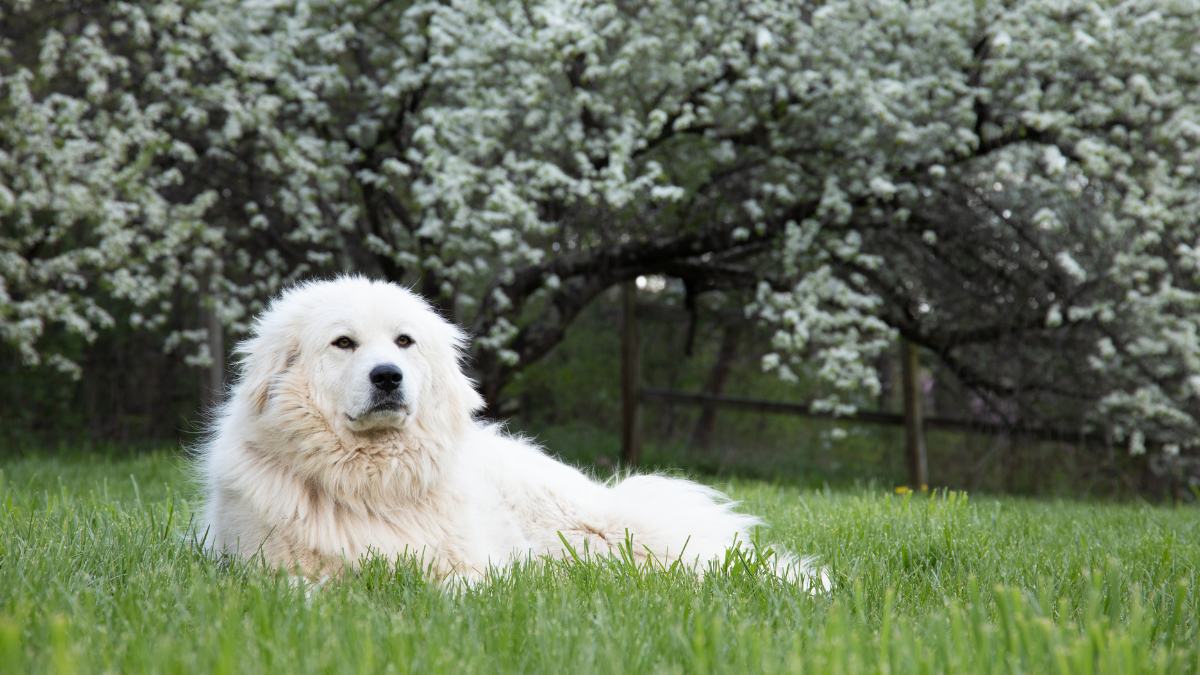
With a thick white coat and impressive size, the Great Pyrenees can appear almost serene. But beneath that peaceful exterior is a dog shaped by centuries of watching over livestock and making decisions without constant human direction.
They can be wonderfully gentle with those they consider family.
But they are always paying attention.
Quietly watching.
Listening.
Deciding when something deserves their response.
1. A Guardian From the Mountains
The Great Pyrenees has centuries of history working in the Pyrenees Mountains between France and Spain.
Their job was not to herd livestock from place to place. It was to live alongside flocks and protect them from potential predators.
That work required patience, courage, independence, and the ability to make decisions when a shepherd was not nearby.
The breed’s impressive coat also helped protect it while working in harsh mountain weather.
Those original instincts remain deeply connected to the Great Pyrenees we know today.
Even in a family home, many still take their role as guardian very seriously.
2. Temperament: Calm, Devoted, and Independent
Great Pyrenees are often described as:
- Calm and composed
- Devoted to their families
- Independent thinkers
- Watchful and protective
- Gentle when appropriately socialized
They are capable of great affection, but they were not developed to wait for constant instructions.
A Great Pyrenees may hear your request, understand it perfectly, and still pause to decide whether it makes sense.
That independence is not simply stubbornness.
It is part of the decision-making ability that once allowed them to guard livestock without constant supervision.
Understanding that history can completely change how you approach living and training with them.
3. Exercise and Mental Stimulation Needs
Despite their impressive size, Great Pyrenees are generally not nonstop athletes.
Healthy adults benefit from consistent moderate exercise rather than endless high-intensity activity.
Appropriate activities may include:
- Daily walks
- Leisurely outdoor exploration
- Scent-based enrichment
- Food puzzles
- Short training sessions
- Time in a securely fenced outdoor space
Their guardian instincts also mean many enjoy calmly observing their surroundings.
Because they may roam when given the opportunity, secure fencing and responsible leash habits are especially important.
The goal is not to exhaust them.
It is to provide a balanced life with movement, enrichment, and meaningful engagement.
4. Grooming That Impressive Double Coat
The Great Pyrenees has a weather-resistant double coat consisting of a long outer coat and a dense undercoat.
And yes, there will be shedding.
Regular grooming helps remove loose fur, prevent tangles, and keep the skin and coat comfortable.
Routine care may include:
- Brushing several times each week
- More frequent grooming during heavy seasonal shedding
- Regular nail trimming
- Ear checks
- Dental care
- Checking the coat and skin after outdoor activity
Their coat generally should not be shaved simply to keep them cool unless there is a medical reason and a veterinarian recommends it.
The coat may look dramatic.
The best care is consistent rather than complicated.
5. Training and Socialization
Training a Great Pyrenees requires patience and realistic expectations.
Their independent working history means endless repetition or harsh corrections are unlikely to create the relationship you want.
Training generally benefits from:
- Positive reinforcement
- Clear and consistent expectations
- Short, purposeful sessions
- Early socialization
- Leash training
- Recall practice in safe environments
Socialization is particularly important for a natural guardian.
Thoughtful exposure to people, animals, environments, sounds, and everyday situations helps a young dog learn what is ordinary and what actually requires concern.
You are not trying to remove their instincts.
You are helping them navigate a modern world with those instincts.
6. Health and Wellness Considerations
As a large breed, the Great Pyrenees has wellness needs that deserve thoughtful attention throughout life.
Supportive care includes:
- Routine veterinary examinations
- Balanced, age-appropriate nutrition
- Healthy weight management
- Age-appropriate exercise
- Joint and mobility monitoring
- Dental care
- Regular skin, coat, and ear checks
Large and deep-chested dogs can also be at risk for gastric dilatation-volvulus, commonly called bloat. Families should discuss risk factors and preventive options with their veterinarian and learn the signs of this life-threatening emergency.
Responsible breeders should also be willing to discuss relevant health screening in their breeding dogs.
A large body deserves proactive support.
7. Is a Great Pyrenees the Right Fit?
A Great Pyrenees may thrive in a home that:
- Appreciates an independent dog
- Can manage a very large breed
- Has secure boundaries and responsible outdoor routines
- Is prepared for substantial shedding
- Can provide patient, positive training
- Understands natural guarding behaviors
Potential families should also be prepared for barking.
For a livestock guardian, sounding the alarm is not necessarily a bad habit. It was part of the job.
The question is whether those natural behaviors fit comfortably into your home, neighborhood, and lifestyle.
Living with a Great Pyrenees means appreciating the guardian as well as the gentle giant.
Gentle Tools That Can Help
- Grooming Brush – Helps manage loose undercoat and maintain coat comfort, especially during seasonal shedding.
- Durable Food Puzzle – Provides low-impact mental enrichment for an intelligent, observant dog.
- Sturdy Walking Harness – Can support comfortable, controlled walks when properly fitted to a large dog’s body.
Internal Resources for Extra Support
- Daily Pet Care Checklist – Track enrichment, grooming, nutrition, and wellness routines.
Seasonal Shop Special
To support thoughtful care routines, we are offering a $3 voucher for any digital guide or supportive tool in our shop.
Use code PYRENEES26 at checkout.
Valid through October 30, 2026.
Visit our Shop for breed support resources.
A Gentle Reflection
The Great Pyrenees was bred to watch over something precious.
Centuries ago, that meant standing quietly beside a flock in the mountains.
Today, it may mean watching the backyard.
Listening at the window.
Or settling near the people they consider theirs.
Their independence can challenge us.
Their size can humble us.
But their quiet devotion is part of what has made this guardian so remarkable for generations.
They watch.
They decide.
And when they give you their trust, they stand beside you.
Frequently Asked Questions
Are Great Pyrenees good family dogs?
They can be gentle and devoted family companions when appropriately socialized and when their size, independence, grooming needs, and natural guarding behaviors suit the household.
Do Great Pyrenees bark a lot?
Many do. Barking is closely connected to their livestock guardian heritage, where alerting and deterring potential threats were important parts of their work.
Do Great Pyrenees need a lot of exercise?
They generally need consistent moderate exercise rather than the intense daily activity required by some sporting and herding breeds. Individual needs vary with age, health, and lifestyle.
Disclaimer
This post is for informational purposes only and is not a substitute for professional veterinary or behavioral advice. Please consult qualified professionals regarding your dog’s individual health, nutrition, exercise, training, or breed-specific needs.
Affiliate Disclosure
Some links in this post may be affiliate links, which means we may earn a small commission if you make a purchase. We only share products we trust to support thoughtful, relationship-centered care.