

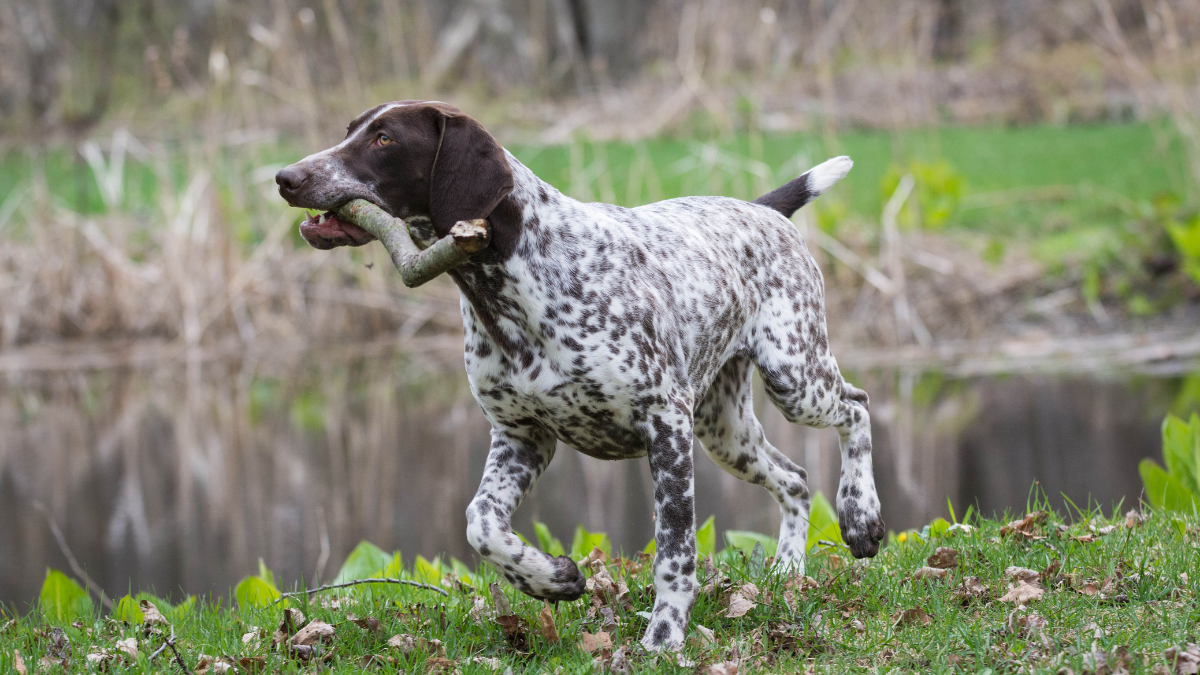
An Athlete with an Enthusiastic Heart
The German Shorthaired Pointer is an athletic sporting breed known for its energy, intelligence, versatility, and strong desire to work alongside its people.
With a sleek coat, powerful build, and unmistakably alert expression, the German Shorthaired Pointer, often called the GSP, was developed to handle many different tasks in the field.
That working heritage is still very much alive today.
They run with enthusiasm.
Learn with purpose.
And rarely want to sit on the sidelines.
For an active family ready to include their dog in everyday adventures, the GSP can be an extraordinary partner.
1. A Versatile Hunting Heritage
The German Shorthaired Pointer was developed in Germany during the 19th century as an adaptable hunting dog capable of working across different terrain and pursuing different types of game.
Rather than specializing in only one task, the breed was developed to point, track, retrieve, and work both on land and around water.
That versatility required athleticism, endurance, intelligence, and a willingness to cooperate closely with people.
Modern GSPs may spend more time hiking trails or playing with their families than working in the field, but those original instincts remain an important part of the breed.
Their history helps explain why they are always ready for the next activity.
2. Temperament: Energetic, Affectionate, and Intelligent
German Shorthaired Pointers are often described as:
- Energetic and enthusiastic
- Intelligent and eager to learn
- Affectionate with their families
- Social and people-oriented
- Alert and curious
Many GSPs form strong bonds with their people and prefer being involved rather than spending long periods alone.
Their enthusiasm can sometimes feel like a lot, particularly during adolescence.
But with appropriate training, exercise, and structure, that same enthusiasm becomes one of the breed’s most engaging qualities.
They do not just want to live beside you.
They want to do things with you.
3. Exercise and Mental Stimulation Needs
The German Shorthaired Pointer is a high-energy working breed.
A casual walk around the block is unlikely to meet the needs of most healthy adult GSPs.
Appropriate activities may include:
- Long walks and hikes
- Running with an appropriately conditioned adult dog
- Fetch and retrieving games
- Swimming
- Scent work
- Field activities
- Agility
- Regular training sessions
Mental stimulation matters too. Their intelligence and working instincts mean they benefit from opportunities to search, learn, retrieve, and solve problems.
Exercise should always be appropriate for the dog’s age, health, conditioning, and environment.
For a GSP, movement is not an occasional activity.
It is part of a balanced life.
4. Grooming and Everyday Care
The GSP’s short, dense coat is relatively easy to maintain.
Routine care may include:
- Weekly brushing
- Bathing as needed
- Regular nail trimming
- Ear checks and cleaning
- Dental care
- Skin and paw checks after outdoor adventures
Their floppy ears deserve particular attention, especially after swimming, because trapped moisture can contribute to irritation or infection.
Active dogs should also be checked after outdoor activities for cuts, irritated paw pads, ticks, burrs, or other debris.
A simple post-adventure check can become an important part of their routine.
5. Training and Socialization
German Shorthaired Pointers are intelligent and highly trainable, but their energy can make consistency especially important.
Training tends to work best when it includes:
- Positive reinforcement
- Clear expectations
- Short, engaging sessions
- Early socialization
- Impulse-control exercises
- Recall practice
Their hunting heritage can contribute to a strong interest in birds and other small animals, so reliable recall and safe leash habits deserve early attention.
Training should give their enthusiasm direction rather than trying to eliminate it.
A busy mind with clear guidance can become an exceptional partner.
6. Health and Wellness Considerations
Like every breed, German Shorthaired Pointers can be predisposed to certain health concerns.
Responsible breeding and regular veterinary care are important throughout life.
Supportive wellness habits include:
- Routine veterinary examinations
- Balanced, age-appropriate nutrition
- Healthy weight management
- Appropriate exercise and conditioning
- Dental care
- Regular ear and skin monitoring
Because GSPs are deep-chested dogs, owners should also discuss the risk of gastric dilatation-volvulus, commonly called bloat, with their veterinarian and understand the signs that require emergency attention.
Prevention begins with knowing what to watch for.
7. Is a German Shorthaired Pointer the Right Fit?
A GSP may thrive in a home that:
- Enjoys an active lifestyle
- Can provide substantial daily exercise
- Wants to train and interact with their dog regularly
- Enjoys hiking, running, retrieving, or other outdoor activities
- Can provide mental enrichment alongside physical activity
- Appreciates an enthusiastic, people-oriented companion
They may not be the best match for households seeking a low-energy dog or one that can routinely spend long stretches without activity or interaction.
The question is not simply whether you have space for a GSP.
It is whether your lifestyle has room for their energy.
Gentle Tools That Can Help
- Long Training Lead – Provides additional freedom for recall practice and exploration while maintaining a safe connection.
- Durable Retrieval Toy – Creates a productive outlet for the breed’s natural retrieving instincts and enthusiasm for movement.
- Interactive Puzzle Toy – Adds mental exercise to days when outdoor adventures need to be shorter.
Internal Resources for Extra Support
- Daily Pet Care Checklist – Track enrichment, grooming, nutrition, and wellness routines.
Seasonal Shop Special
To support thoughtful care routines, we are offering a $3 voucher for any digital guide or supportive tool in our shop.
Use code GSP26 at checkout.
Valid through October 30, 2026.
Visit our Shop for breed support resources.
A Gentle Reflection
The German Shorthaired Pointer brings enthusiasm to almost everything.
A trail becomes an adventure.
A training session becomes a challenge.
A game of fetch becomes the most important event of the afternoon.
That energy can be demanding.
But for the right home, it is also part of the magic.
Give them movement.
>Give them purpose.
>Give them a place beside you.
And the GSP will be ready for whatever comes next.
Frequently Asked Questions
Do German Shorthaired Pointers need a lot of exercise?
Yes. GSPs are high-energy sporting dogs that generally need substantial daily physical activity as well as mental enrichment. Exercise should always be adjusted for age, health, weather, and individual conditioning.
Are German Shorthaired Pointers good family dogs?
They can be affectionate and enthusiastic family companions when their training, socialization, exercise, and enrichment needs are consistently met.
Are German Shorthaired Pointers easy to train?
They are intelligent and capable learners. Positive, engaging, and consistent training can help channel their natural energy and working instincts into productive behaviors.
Disclaimer
This post is for informational purposes only and is not a substitute for professional veterinary or behavioral advice. Please consult qualified professionals regarding your dog’s individual health, nutrition, exercise, training, or breed-specific needs.
Affiliate Disclosure
Some links in this post may be affiliate links, which means we may earn a small commission if you make a purchase. We only share products we trust to support thoughtful, relationship-centered care.