

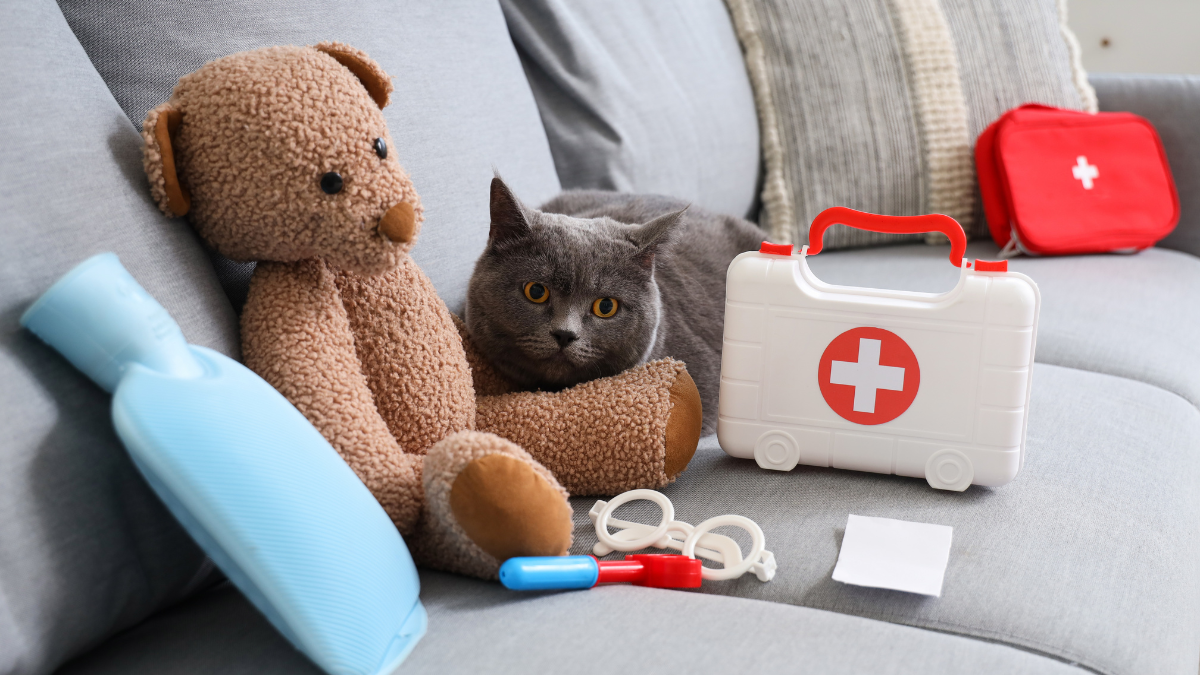
September is National Preparedness Month, making it a helpful reminder to think about what your pet might need if the unexpected happens.
Emergency planning can sound intimidating, but it doesn’t have to come from a place of fear. A stocked bag, current identification, and a simple plan can turn uncertainty into something much more manageable.
Whether you’re dealing with severe weather, a power outage, or an unexpected evacuation, preparing a few essentials now can help you make calmer decisions later.
You don’t need a perfect emergency plan.
You simply need somewhere to begin.
Pet emergency preparedness includes keeping several days of food and water available, organizing medications and records, maintaining current identification, knowing pet-friendly evacuation options, and practicing simple evacuation routines. Reviewing your kit regularly helps keep your household prepared for unexpected situations.
1. Start With One Easy-to-Grab Emergency Bag
During an emergency, the last thing you want to do is search the house for supplies.
Choose one bag or container dedicated specifically to your pet and store it somewhere easy to access.
Your basic supplies should include:
- At least three days of food and water
- Current medications
- Copies of vaccination and veterinary records
- Leash, harness, or carrier
- Food and water bowls
- Waste bags or litter supplies
- One familiar comfort item
If you’re able to prepare enough supplies for longer than three days, even better.
The important thing is having the essentials together and ready.
2. Make Identification Part of the Plan
Emergencies can create unfamiliar and stressful situations, increasing the risk of pets becoming separated from their families.
Check that your pet’s collar fits properly and their ID tag contains current contact information.
If they’re microchipped, confirm the registration information is up to date.
Keep recent photos of your pet on your phone as well. Having clear images available can make identification and sharing information much easier if you’re ever separated.
3. Know Where You Can Go Together
Don’t wait for an evacuation order to discover that your destination doesn’t allow pets.
Research pet-friendly hotels, shelters, boarding facilities, and other safe locations before you need them.
You might also identify a trusted friend or family member outside your immediate area who could temporarily welcome both you and your pet.
Save addresses and phone numbers somewhere accessible even if internet service becomes unavailable.
Knowing your options removes one more decision from an already stressful moment.
4. Create a Safe Space at Home
Not every emergency requires evacuation.
For storms, power outages, or other situations where staying home is safest, identify a secure interior area where everyone can gather.
Keep your pet’s carrier or leash accessible rather than buried in storage.
A simple written household plan can also clarify who is responsible for grabbing your pet, emergency supplies, medications, and other essentials.
Preparation helps everyone know what to do.
5. Practice Before You Need the Plan
Your emergency routine shouldn’t be completely unfamiliar to your pet.
Occasionally practice simple steps such as:
- Calling your pet to their carrier.
- Putting on their harness.
- Walking calmly to the car.
Keep practice sessions short and positive with treats and praise.
These small rehearsals can make familiar actions easier to follow when the environment around your pet feels unfamiliar.
6. Refresh Your Kit Regularly
Emergency supplies aren’t something you pack once and forget.
Food expires. Medications change. Phone numbers get updated. Pets grow out of harnesses.
Choose two times each year to review your kit and check:
- Food and water expiration dates
- Medication supplies
- Veterinary records
- ID tags
- Microchip information
- Harness or carrier fit
- Emergency contact information
A few minutes twice a year can keep your plan ready when it matters.
Pet Emergency Kit Checklist
Food & Hydration
✓ Several days of pet food
✓ Bottled water
✓ Collapsible food and water bowls
✓ Manual can opener if needed
Health & Identification
✓ Current medications
✓ Veterinary and vaccination records
✓ Pet first aid supplies
✓ Current ID tag
✓ Microchip information
✓ Recent pet photos
Safety & Travel
✓ Leash and harness
✓ Carrier or crate
✓ Waste bags or litter supplies
✓ Blanket or towel
✓ Familiar comfort item
Emergency Information
✓ Veterinarian contact details
✓ Emergency animal hospital information
✓ Pet-friendly evacuation locations
✓ Trusted emergency contact
Keep the checklist with your kit so you can review everything quickly.
Gentle Tools That Can Help
- Slip-On Backup Leash — A compact second leash that can stay permanently inside your emergency bag.
- Pet First Aid Kit — Keeps basic first aid supplies organized and accessible.
Internal Resources
- Pet Insurance Made Simple: A Guide to Confident, Prepared Pet Care – Understand how pet insurance can support planning for unexpected veterinary expenses.
- Choosing the Right Veterinarian Made Simple: What Pet Parents Should Look For – Helpful questions for building a trusted veterinary relationship before an emergency occurs.
- Daily Pet Care Checklist: Simple Routines to Support Your Pet’s Health and Happiness – Simple everyday habits that create a strong foundation for long-term wellness.
Seasonal Shop Support
To support calmer preparedness this September, we’re offering $3 off any of our digital guides or supportive tools.
Use code CALMSEPT26 at checkout.
Valid through September 30, 2026.
Visit our Shop here
A Gentle Reflection
Being prepared doesn’t mean expecting something bad to happen.
It means knowing that if an uncertain moment arrives, you won’t have to figure everything out at once.
The food is packed. The records are ready. The leash is within reach. And you already know where you’re going.
Sometimes peace of mind begins with a bag waiting quietly by the door.
Join our email list for steady guidance and seasonal support throughout the year.
Frequently Asked Questions
How much food and water should I keep for my pet?
Aim for at least three days of food and water, and more when practical. Rotate stored supplies regularly so they remain fresh and usable.
What if emergency shelters near me don’t allow pets?
Research alternatives ahead of time, including pet-friendly hotels, boarding facilities, and trusted friends or family outside your immediate area.
How often should I update my pet’s emergency kit?
Reviewing it twice a year creates an easy routine. Replace expired supplies and confirm that medications, identification, records, and emergency contacts are current.
Disclaimer
This content is for informational purposes only and is not a substitute for veterinary or emergency professional advice. Follow local emergency instructions and contact your veterinarian or an emergency animal hospital when professional care is needed.
Affiliate Disclosure
Some links may be affiliate links. We only share products that support thoughtful, compassionate pet care.