
Small in Stature, Big in Personality
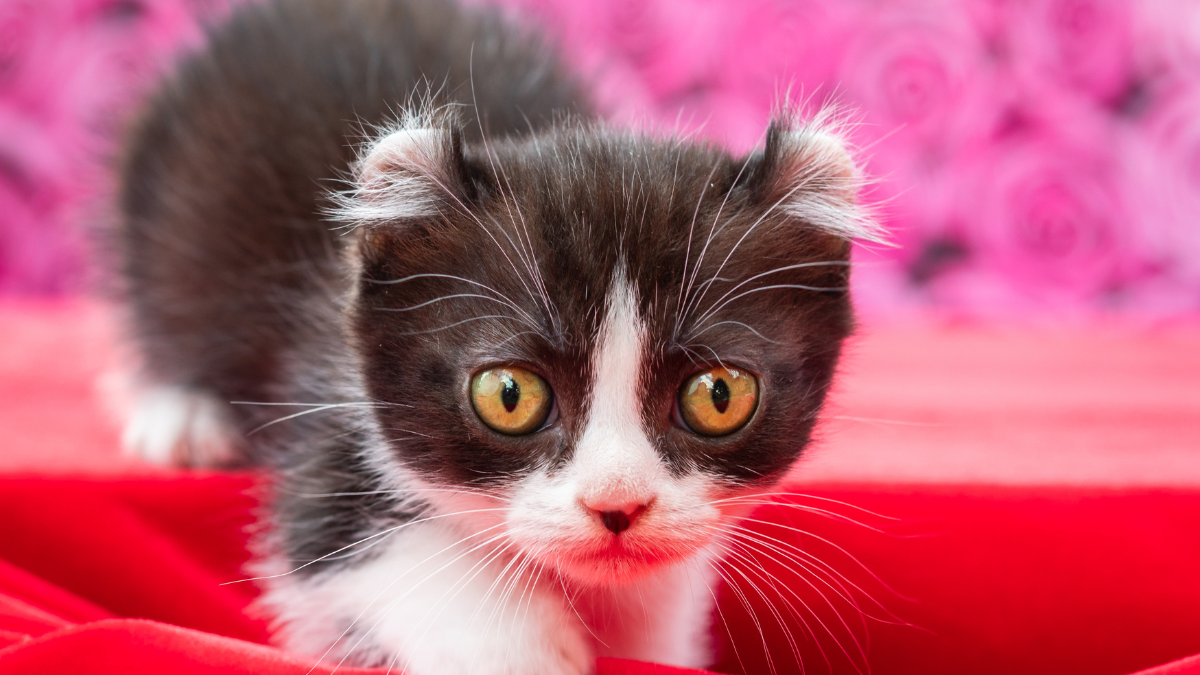
The Kinkalow is a rare, small cat known for its short legs, distinctive curled ears, and playful, people-oriented personality.
Developed from Munchkin and American Curl cats, the Kinkalow combines two especially noticeable physical traits: shortened legs and ears that curl gently backward.
Their unusual appearance may be what gets noticed first, but these cats are also known for being curious, lively, and affectionate companions.
They may be little.
Their personality certainly isn’t.
1. A Relatively New and Rare Cat
The Kinkalow is a relatively recent breed developed in the United States beginning in the 1990s.
The goal was to combine the short-legged appearance associated with the Munchkin with the curled ears of the American Curl.
Because the breed remains uncommon and is not recognized by every major cat registry, prospective families may find far fewer Kinkalows than more established breeds.
Not every kitten from Kinkalow breeding will necessarily express signature physical traits in the same way.
Their rarity is part of what makes responsible breeding especially important.
2. Temperament: Playful, Curious, and Affectionate
Kinkalows are often described as:
- Playful and energetic
- Curious about their surroundings
- Social with their people
- Affectionate and engaging
Many enjoy being involved in household activity, investigating toys, following family members, and finding new ways to play.
Their small size should not be mistaken for a lack of energy.
A Kinkalow can bring plenty of activity into a surprisingly compact package.
3. Exercise and Environmental Enrichment
Kinkalows benefit from daily opportunities to move, investigate, and play.
Enrichment may include:
- Interactive wand toys
- Puzzle feeders
- Low and accessible climbing structures
- Tunnels and hiding spaces
- Treat-based games
- Short training sessions
Because individual mobility can vary, the environment should suit the cat rather than expecting the cat to adapt to difficult spaces.
Strategically placed steps or lower platforms can help make favorite resting and observation areas easier to reach.
Enrichment should invite movement without demanding uncomfortable movement.
4. Grooming and Ear Care
A Kinkalow’s grooming needs can vary depending on coat length and texture.
Routine care may include:
- Gentle weekly brushing
- Regular nail trimming
- Dental care
- Routine skin and coat checks
- Careful observation of the ears
Their curled ears deserve particular attention. The ears should be handled gently rather than pulled or forced into another position.
Check them regularly for redness, debris, odor, or other changes, and ask your veterinarian for guidance if anything seems unusual.
Gentle handling matters more than aggressive cleaning.
5. Health and Wellness Considerations
Because the Kinkalow is a newer and relatively uncommon breed, extensive long-term breed-specific health information is limited.
Their physical traits also make responsible breeding particularly important. The short-legged trait associated with Munchkin ancestry results from a genetic change affecting bone development, while the curled-ear trait comes from American Curl ancestry.
Prospective families should ask breeders detailed questions about health screening, lineage, mobility, and breeding practices.
Routine wellness should include:
- Regular veterinary examinations
- Healthy weight management
- Monitoring mobility and movement
- Dental care
- Ear monitoring
- Balanced, age-appropriate nutrition
If a Kinkalow begins hesitating to jump, moving differently, appearing stiff, or avoiding activities they previously enjoyed, a veterinary evaluation is appropriate.
Their unusual appearance should never matter more than their comfort.
6. Is a Kinkalow the Right Fit?
A Kinkalow may thrive in a home that:
- Enjoys a playful and interactive companion
- Can provide accessible enrichment
- Is prepared to monitor mobility throughout life
- Understands the care associated with curled ears
- Prioritizes health and responsible breeding over appearance
Anyone considering this rare cat should be prepared to research breeders carefully and ask questions about how health and welfare are prioritized.
A distinctive appearance can start the conversation.
A comfortable, enriched life should always be the goal.
Gentle Tools That Can Help
- Low-Profile Cat Tree – Creates opportunities for climbing and observation without requiring unnecessarily high jumps.
- Interactive Wand Toy – Encourages natural chasing and play while allowing activity to be adjusted to the individual cat’s mobility.
- Pet Steps or Ramp – Can make favorite furniture and resting places more accessible if additional support is helpful.
Internal Resources for Extra Support
- Daily Pet Care Checklist – Track enrichment, grooming, nutrition, and wellness routines.
Seasonal Shop Special
To support thoughtful care routines, we are offering a $3 voucher for any digital guide or supportive tool in our shop.
Use code KINKALOW26 at checkout.
Valid through October 30, 2026.
Visit our Shop for breed support resources.
A Gentle Reflection
The Kinkalow reminds us that the traits that make an animal look different also deserve thoughtful care.
Those tiny legs may capture attention.
Those curled ears may make them unforgettable.
But neither matters as much as the curious cat behind them.
A cat who wants to play.
Explore.
Connect.
And move through the world comfortably.
Celebrate what makes them distinctive while always putting their well-being first.
Frequently Asked Questions
What breeds make up the Kinkalow?
The Kinkalow was developed by crossing Munchkin and American Curl cats, combining the former’s short-legged trait with the latter’s curled-ear trait.
Do all Kinkalows have short legs and curled ears?
Not necessarily. Because these characteristics are inherited genetic traits, kittens may not all express both features in the same way.
Do Kinkalows need special care?
Their basic needs are similar to those of other domestic cats, but thoughtful attention should be given to mobility, weight, accessible enrichment, and their curled ears. Individual veterinary guidance is especially valuable.
Disclaimer
This post is for informational purposes only and is not a substitute for professional veterinary advice. Because the Kinkalow is a relatively uncommon breed with distinctive inherited physical traits, please consult a qualified veterinarian regarding an individual cat’s mobility, ear health, nutrition, and other care needs.
Affiliate Disclosure
Some links in this post may be affiliate links, which means we may earn a small commission if you make a purchase. We only share products we trust to support thoughtful, relationship-centered care.