
If you’ve been on the fence about microchipping your pet or just aren’t sure what microchipping actually entails, you’ve come to the right place. At The Pet Concierge we think that every pet should be microchipped, and we hope we can convince you of the same.
To sum up our reasoning in one sentence: microchipping is a quick, cheap, and relatively non-invasive injection that is administered just like a vaccination and carries with it the amazing benefit of allowing a shelter or person who has found your lost pet to locate and get in touch with you.
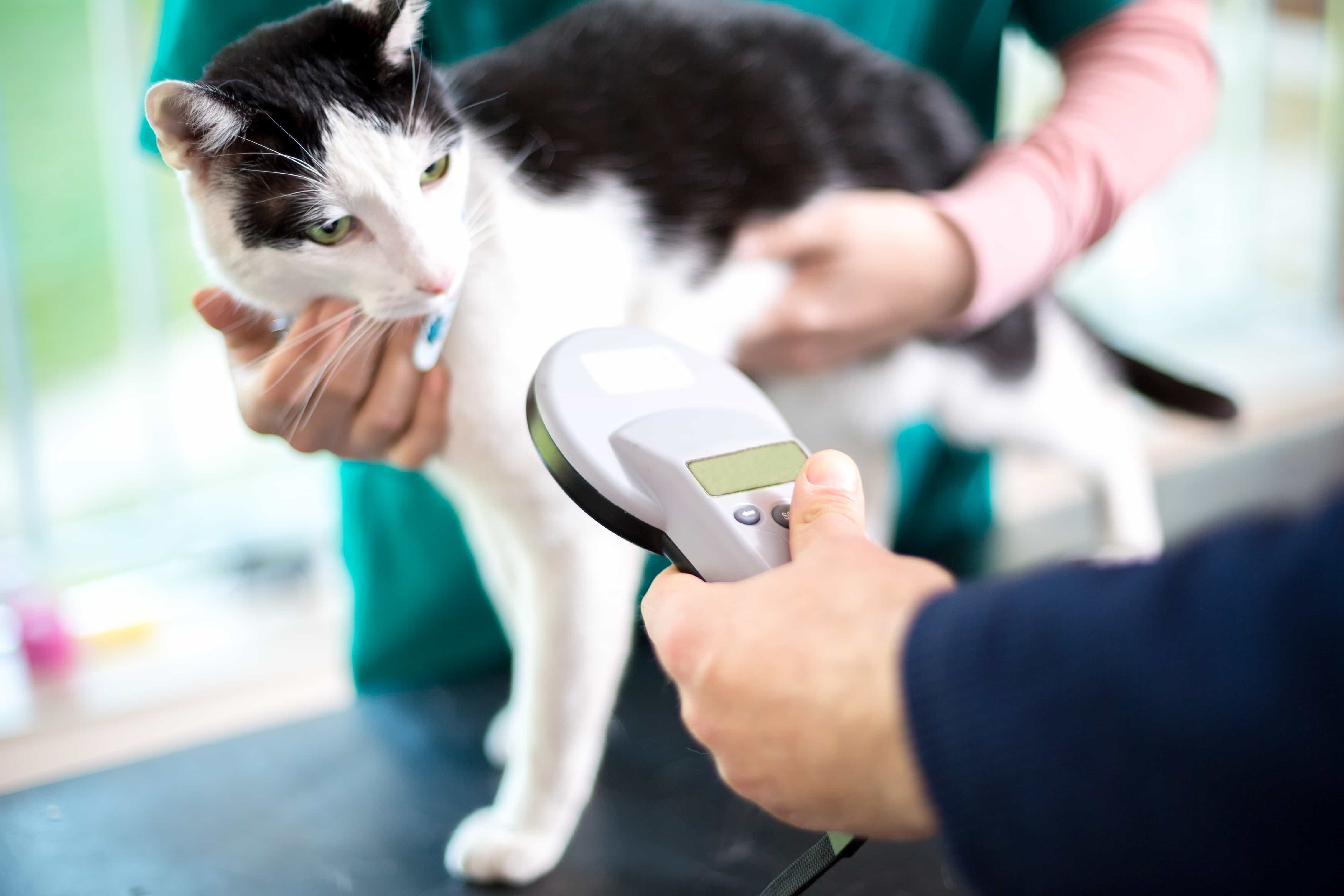
The microchip, which is injected in the shoulder area of your pet, is a tiny device encoded with a serial number that corresponds to the contact information that you have given the microchip company. If your pet gets lost and someone brings it to a shelter or other veterinary facility, the first thing that they should do is scan your pet and see if there is a microchip.
But getting the microchip injected isn’t the last step your need to take to keep your pet safe—you also need to update it whenever you move. As Dr. Gary Richter, DVM says, “if the information is outdated then the microchip is useless to you”. This is really one of the most important takeaways we want you glean from this article: you must update your contact information with your microchip company if you ever move or get a new phone number. Some people mistakenly think that the microchip can act as a GPS or locating device, but, really, it is simply a serial number that connects whomever has found your pet with your information. If the information is out of date, the microchip might as well be useless.
And, for a chip that can literally make the difference between recovering a pet and losing her/him forever, the cost and commitment of getting one put in your pet is minimal. The chip is a simple injection that can safely be given while your pet is fully awake (i.e. there is no need for sedation or anesthesia). If you are at all concerned about how much pain it will cause, or simply want to minimize the amount of injections your pet is getting while conscious, many veterinarians will offer to do the procedure while your pet is getting spayed or neutered. This way, they are already anesthetized. If you think you’d like to have the chip implanted during a spay/neuter, just ask your veterinarian and they will be more than happy to oblige.
The cost of getting a microchip varies from practice to practice, but it shouldn’t be more than $50 and is often considerably less. We think the investment is worth it.
Finally, we’d like to offer one quick tip to make sure that your pet’s chip comes through when you need it to. Rarely, microchips may move to a slightly different part of your pet’s body than where it was initially placed. Good shelters and practices will scan a pet’s entire body when looking for a chip, making this a non-issue. However, just to be safe, we recommend having your veterinarians scan for your pet’s chip every time you visit to make sure that it is still working and in the right place (many vets will do this without asking, but it is always good to check).
To reiterate: microchipping your pet is a tiny investment in terms of time, money, and discomfort for your pet, especially when you consider that it can make the difference between life and death for your loved one. If your pets don’t have one already, there’s no time like the present.
Was this article helpful? For more great insights on how to take the best care of your pet, check out our free pet care tips!
Click Here for Access